No. 200 - Restoring a 1980 Jeep CJ-5: Part 1 of 5
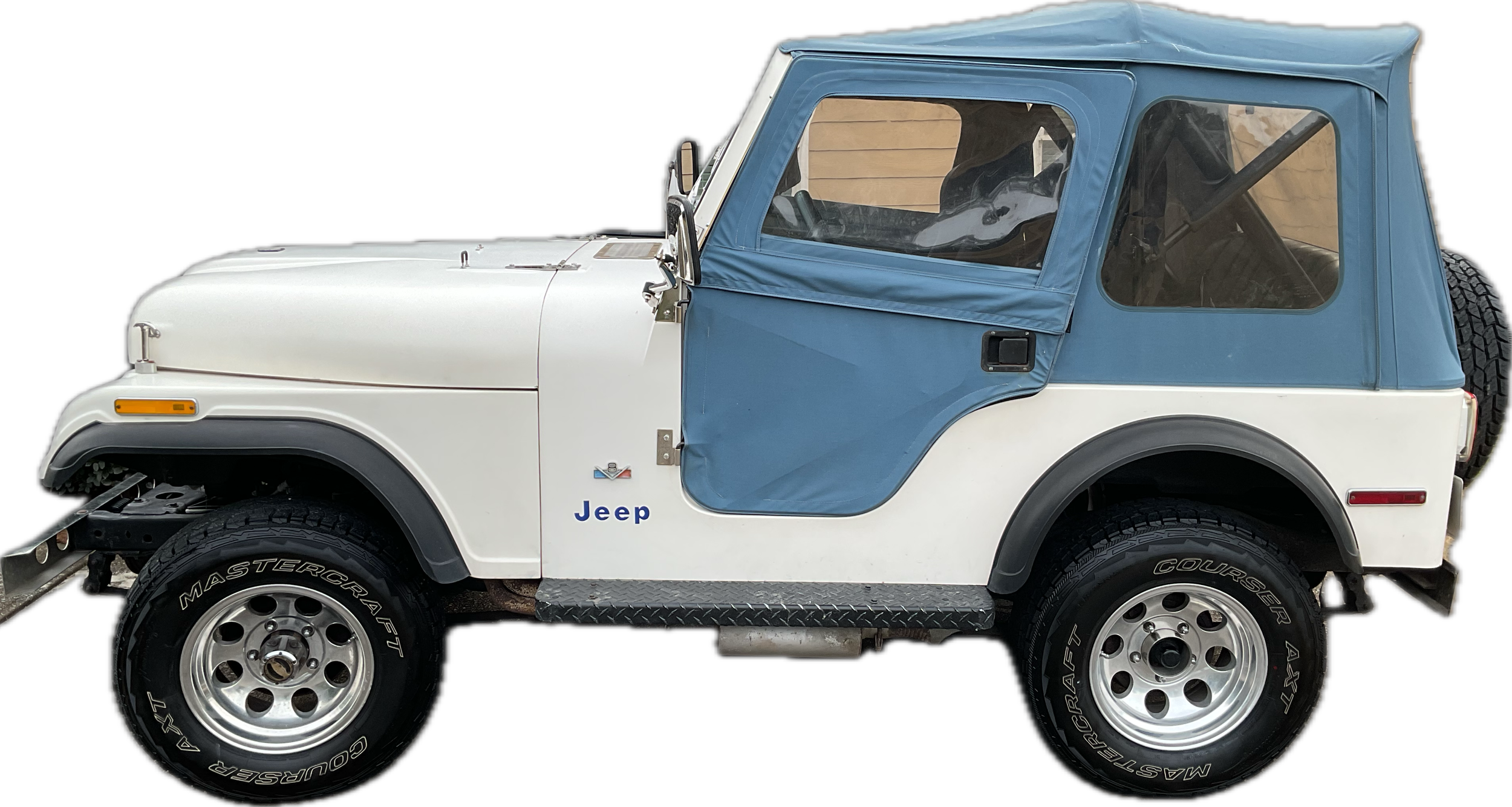
I’ve wanted a Jeep – scratch that – I’ve wanted a CJ since I was fourteen. I would’ve settled for a Wrangler in the ’90s, but I was desperate to own a real Jeep, without doors and a single roll bar.
So, thirty years later, I was browsing Craigslist and found a 1980 CJ-5 for sale in the hills of Tennessee. Asking price: $8,500.
I texted the owner to see if it was still available, and to my amusement, it was. He told me three things: it had been in the same family for forty-four years, it had a rebuilt Chevy 350 with only 1,700 miles on it, and it could be a daily driver.
I offered $6,500. He accepted. I did no research and didn’t ask for a VIN. All I said was that I’d meet him at his farm in a few days with a stack of hundred-dollar bills. He later told me he sold it to me because I didn’t bother him with a million questions.
Because it was Thanksgiving week, I couldn’t find a ride to pick it up. My usual road-trip buddies were either hunting in Arkansas, on holiday in Memphis, or stuck with in-laws. So I ordered an Uber.
My driver was a friendly gentleman who said this was the longest ride he’d taken in his ten years of driving.
Two hundred and thirty miles later, I arrived in the backcountry of Tennessee. All I can tell you is that somewhere along the way I saw an exit sign for Lynchburg. I figured if the Jeep turned out to be a disaster, I’d thumb a ride to the Jack Daniel’s distillery and convince someone to rescue me with the promise of a few gallons of Tennessee’s finest – hoping they didn’t know it’s in a dry county.
That turned out to be unnecessary. The second I laid eyes on Odette, I knew she was mine. I handed the owner a bank envelope full of cash, he handed me the title, and I took off.
For the record, I have never named a car. Then again, I never owned one worthy of a name until Odette and I met.
I named her after a middle-aged French prostitute. She still has her looks, but she’s showing her age, which makes her temperamental. She’s also an arrogant dame. Her best years are in the rearview mirror, and she knows it, but that doesn’t stop her from reminding you that she was once courted by barons and counts from distinguished Parisian families.
I hadn’t made it down the hill from his farm before realizing the Jeep didn’t have power brakes and the steering was dangerously sloppy. The first thought that crossed my mind was, you made a huge mistake. What I didn’t know was the tires were severely over-pressured – 40 PSI instead of the recommended 28 to 30 – creating a rigid driving experience with the handling of a boat.
But I didn’t care. I had my Jeep. Thirty years of waiting had me wearing blinders, ignoring just about anything that got in the way of having fun, including Odette’s middle-aged peculiarities.
It didn’t take long to realize none of the gauges worked, so I stopped every thirty miles to top off the tank. Luckily, the speedometer functioned, letting me know I was never going to top 55 mph – nor would I want to. With an 83-inch wheelbase, a CJ is closer to a tractor than a car.
Around the time the sun was setting, I hopped on I-75, where I was passed by no fewer than a hundred pissed-off eighteen-wheelers and a few school buses. I zipped open the window, lit a cigar, and settled into the right lane for what felt like a fortnight.
At 55 mph, the Jeep did surprisingly well. It isn’t aerodynamic, but in fourth gear it finds a comfortable rhythm when the road is straight and unbroken. Save for a few potholes, the drive was somewhat enjoyable.
When I finally got home, I realized a few things that only owners of old ORVs understand:
Slow and steady wins the race
Leaf springs are unforgiving
Twentieth-century halogen headlights enrage twenty-first-century drivers
First gear is pure torque, designed to get you from zero to eight miles per hour
CJ stands for Civilian Jeep, but it could just as easily stand for Catastrophic Jalopy
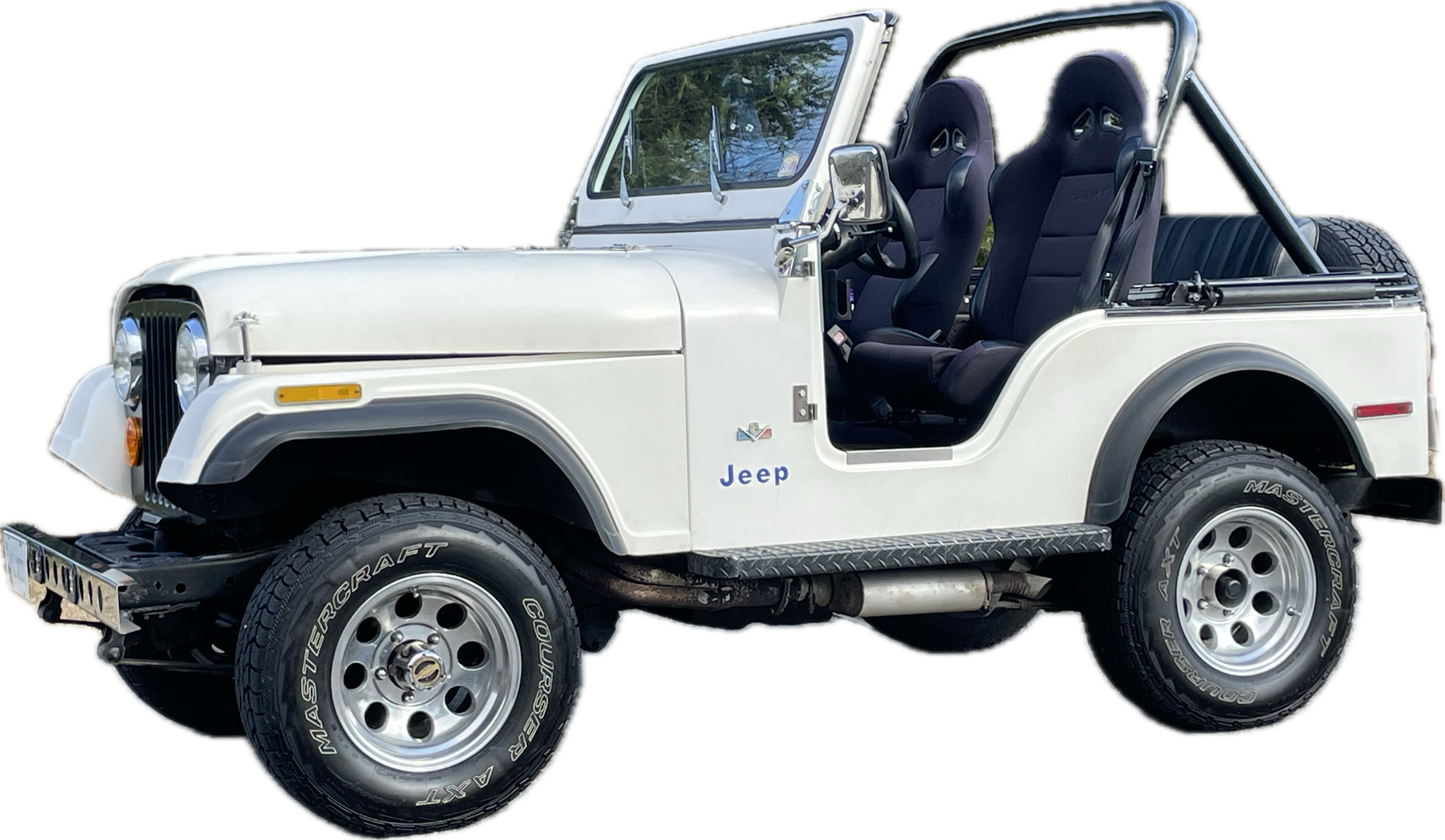
My Jeep has exactly zero modern safety features. Not one. It technically has seat belts, but they’re attached to aftermarket seats that are barely bolted to the floor. Cloth doors and a soft top are all that separate you from the outdoors – along with a roll bar, should I flip it.
There’s no air conditioning, and only the remnants of a heater. To compensate, I keep an old Norwegian ski sweater and a beanie in the back.
As for music, two blown speakers manage to pull in a few radio stations. There’s an old Widespread Panic tape in the glove box, but the cassette deck doesn’t work.
The fix-it list is long and expensive, but the Jeep drives remarkably well for a half-century-old ORV – until it doesn’t. Yesterday, the brakes went out, leaving me to drive at a snail’s pace with only downshifting to slow down. Once I managed to limp it into a parking lot, I lit a cigar, called the wrecker, and settled into a book.
In any case, I’m going to tell the story of restoring this Jeep. My fourteen-year-old son will receive it when he gets his driver’s license, which gives me eighteen months to complete about forty tasks. I estimate the repair bill to be $35,000.
Unlike vintage Broncos, Defenders, and FJs, a CJ can be restored for about half the price. I’m not doing a frame-off restoration, which would double the cost. I just want a daily driver built for fun – not a showpiece that requires parking in the back of the lot in fear of a rogue buggy.
I’m not putting big tires on it and nothing showy. I want it to look as close to what it did at the Jeep dealership in 1980. To be candid, it’s already hard enough to get in and out of it on 29” tires.
We’re moving to St. Simons Island off the coast of Georgia, which makes this Jeep practical in ways it never could be in Atlanta.
The speed limit on the island is 25 to 35 mph, so it will rarely move fast or travel far. If you’ve been to Sun Valley, Martha’s Vineyard, or any mountain or beach town, you’ve probably noticed the abundance of old ORVs. These trucks were never designed for cities, and in the twenty-first century they only make sense in small towns.
And since the Jeep doesn’t have locks – or doors most of the time – it would be an easy target almost anywhere else. On a barrier island in south Georgia, it just blends in – Stealie license plate and all.
If you see it parked, there will likely be a hat hanging from the rearview mirror and various tobacco products sitting shotgun. I don’t worry about it in the northern suburbs of Atlanta, but there’s no chance I’d leave it unattended in the city (even though it currently takes four steps to crank it and not one involves a key).
She’s an ornery old gal, but she’s perfect for me. I anticipate she’ll be in the family for as long as I am. From what I’ve been told, when I’m done fixing her, she’ll be good for another forty years.
There’s something to be said for an old truck with no technology – just steel, rubber, and wires. Which pairs well with other things I’ve incorporated into my life, including the deletion of social media (LinkedIn too), pretty much abandoning email for my typewriter and postcards, and ditching iTunes for records. Next up is a flip phone.
This Jeep is part of a new phase of my life, where I’m slowing everything down. A mentor once said that the secret to success is all about subtraction – not addition: to look at your life and see what can be removed; bad habits, vice, etc., because it’s a hell of a lot easier to give something up than add more to an already busy life.
And this Jeep is that for me. I needed a car and decided I’d treat myself to something I really wanted (for a long time). And if it was built half a century ago, before technology showed up disguised as convenience, well, then all the better.
I get a kick out of shifting through gears, not having a clock, and having to actually drive. You don’t realize how disconnected you are from the joy of driving until you’re zipping past horse farms with the top off. I’m having the time of my life, and I wouldn’t trade it for anything – not even a brand new Range Rover.
So, with that said, I aim to document the restoration of my CJ-5, but it’s also the manifestation of a dream – born in the mind of a fourteen-year-old boy who saw fun and freedom in every Jeep. And now, at the ripe old age of 46, I’m living inside the dream.
APPENDIX A:
RESTORATION BUDGET & TIMELINE
I’ve assumed labor to be $155 per hour and I’m buying a majority of the parts. The prices are at the higher end of estimates.
In the interest of full disclosure, I am not a mechanic. I barely passed shop class in high school. So how does a mechanical dunce figure all of this out? AI, of course. I took a ton of photographs, uploaded them to ChatGPT, asked for a full diagnosis, and cross-referenced with Claude. I spent over a hundred hours doing this and learned a lot about my Jeep. To me, it was an intellectual exercise in the mechanical arts. I spent another hundred hours watching videos on differentials, drive shafts, gear ratios, transfer cases, Ackerman steering, drum brakes, manual transmissions, and everything mentioned below. I dove into the engineering, mechanics, and history of Jeep with a familiar obsessive enthusiasm. Had anyone suggested I'd know anything about the mechanics of an automobile prior to this endeavor, I would've laughed. But mechanical dunce I am no longer.
Phase 1 is mostly mechanical, 2 is dialing it in for comfort, and 3 is aesthetic.
Phase 1
$1,000 - Fuel System (Tank + Sending Unit + Hoses + Skid Plate)
$650 - Complete Drivetrain Fluid Service
$2,200 - Power Brake Conversion + All Brake Lines
$1,700 - Complete Front and Rear Brake Replacement
$3,000 - Complete Front-End Rebuild
$475 - Steering System – Rag Joint, Steering Shaft U-Joint
$1,100 - Exhaust System
$330 - Steering Box Brace Installation
$1,270 - New Tires
$630 - Battery Drain Diagnosis + Remove Push-Button + Tach
$450 - Headlight & Front Marker Light Circuit Repair
$250 - Shifter Bushing Kit Installation
$175 - Throttle Cable + Return Spring Replacement
Phase 2
$2,000 - Leaf Spring Replacement – Front & Rear
$500 - Shock Absorbers
$250 - Oil Change + Drive Belt Replacement
$3,700 - Electronic Fuel Injection
$1,000 - Underbody Cleanup + Chassis Paint
$170 - Dash / Body Ground Strap Installation
$1,400 - Engine Bay Detail & Visual Refresh
$350 - Driveshaft U-Joints – Front & Rear
$75 - Install Floor Dimmer Switch
$60 - Headlight Aim / Adjustment
$800 - Heater Box Restore
$200 - Heater Control Cables
$300 - Coolant System Refresh – Hoses, Thermostat, Flush
Phase 3
$650 - Remove Aftermarket Gauges + Weld Dash Holes Closed
$700 - Dash Prep + Paint (White)
$800 - Radio + Dash Speaker Install
$250 - Dye Dash Pad (Brown) + Plastic Trim
$1,500 - Sound Deadening + Carpet Kit + Floor Prep
$2,500 - Install Seats, Sliders, Mounts, Belts, Remove Back Seat
$1,700 - Upholster Seats (Blue Houndstooth, Marine Vinyl)
$500 - Steering Wheel + Horn Install
$400 - New Front Bumper (Black) + Labor
$800 - Shifter Upgrade – Straight OEM-Style Transmission
All 36 items have been broken down to the level of detail below. Full specifications available upon request.
Example – Item #1: Fuel System
Fuel System – Tank, Sending Unit, Hoses, Gasket, Skid Plate Replacement ($770–$1,108)
Work:
Remove existing fuel tank
Remove rotted OEM skid plate
Install new steel fuel tank
Install new steel skid plate cradle
Replace sending unit and verify float resistance
Replace vent hoses, filler neck hose, clamps, and gaskets
Install/clean tank grounding strap
Pressure-test system for leaks
Optionally coat skid plate with rust-resistant paint
Fuel hard line replaced as part of tank install
Inspect filler neck metal tube for rust or cracking; replace only if unsafe (owner approval required)
Verify fuel gauge operation on dash by sweeping sender (E → F) before reinstalling tank
Confirm tank/sender ground is clean bare metal and gauge reads correctly
Goal:
Restore the entire fuel system as one brand-new assembly. Eliminate overflow issues, starvation, venting failures, rust contamination, and dead gauge readings. Ensure structural support and safe protection for the new tank.
Parts:
Steel tank: $175
Sending unit: $40–$75
Vent hoses & clamps: $20–$40
Filler neck gasket: $10–$15
New skid plate: $130
Fuel hard line: $75
Inline fuel filter: $10–$15
Parts Total: $460–$565
Labor:
2–3.5 hrs @ $155/hr = $310–$543
Total: $770–$1,108 (average $940)
I’ve got eighteen months to finish the work, but in the meantime I have a daily driver that smells like gasoline when it’s sitting still, catches the eye of every boy who sees it, and makes me feel like a teenager. Oh, and I can smoke cigars in it with impunity.
*Composed, Edited, and Published in Atlanta, GA